


Nearly half a million people could die from El Nino heat in next six months, study says
Nearly half a million people could die from El Nino heat in next six months, study says

Stuti MishraWed, September 23, 2026 at 11:24 AM UTC
100
The “super” El Nino weather event and the record global heat it is driving could cause almost half a million additional deaths worldwide over the next six months, a new report has warned.
Researchers say that up to 451,000 extra heat-related deaths between June and the end of February could be linked to El Nino, compared with the number of heat deaths expected in a typical year.
The report, published by the Climate Impact Lab based at the University of Chicagom, said the heaviest toll would fall on less affluent countries, which are already struggling with food insecurity and high energy costs, driven partly by climate change and the fallout of the Iran war.
The Sahel region of Africa, the semi-arid countries along the southern fringe of the Sahara Desert, is expected to be hit hardest, with about 66,800 additional deaths linked to the heat, the report found.
Other major hotspots include South and Southeast Asia and parts of Latin America, with researchers projecting about 19,400 additional deaths across the Philippines, Vietnam, Thailand and Cambodia, 19,300 in Indonesia, 15,800 in India and 13,300 in Brazil.
Michael Greenstone, a co-founder of the Climate Impact Lab and co-author of the study, said the heat danger was likely to persist beyond February. Although the current El Nino is projected to subside by then, he said its secondary impacts could endure well into next summer.
"If you're already in a hot place, the extra couple of degrees are going to be much more dangerous," Mr Greenstone said, adding that wealthier places generally had greater access to air conditioning, reliable water supplies and functioning health systems.
Advertisement
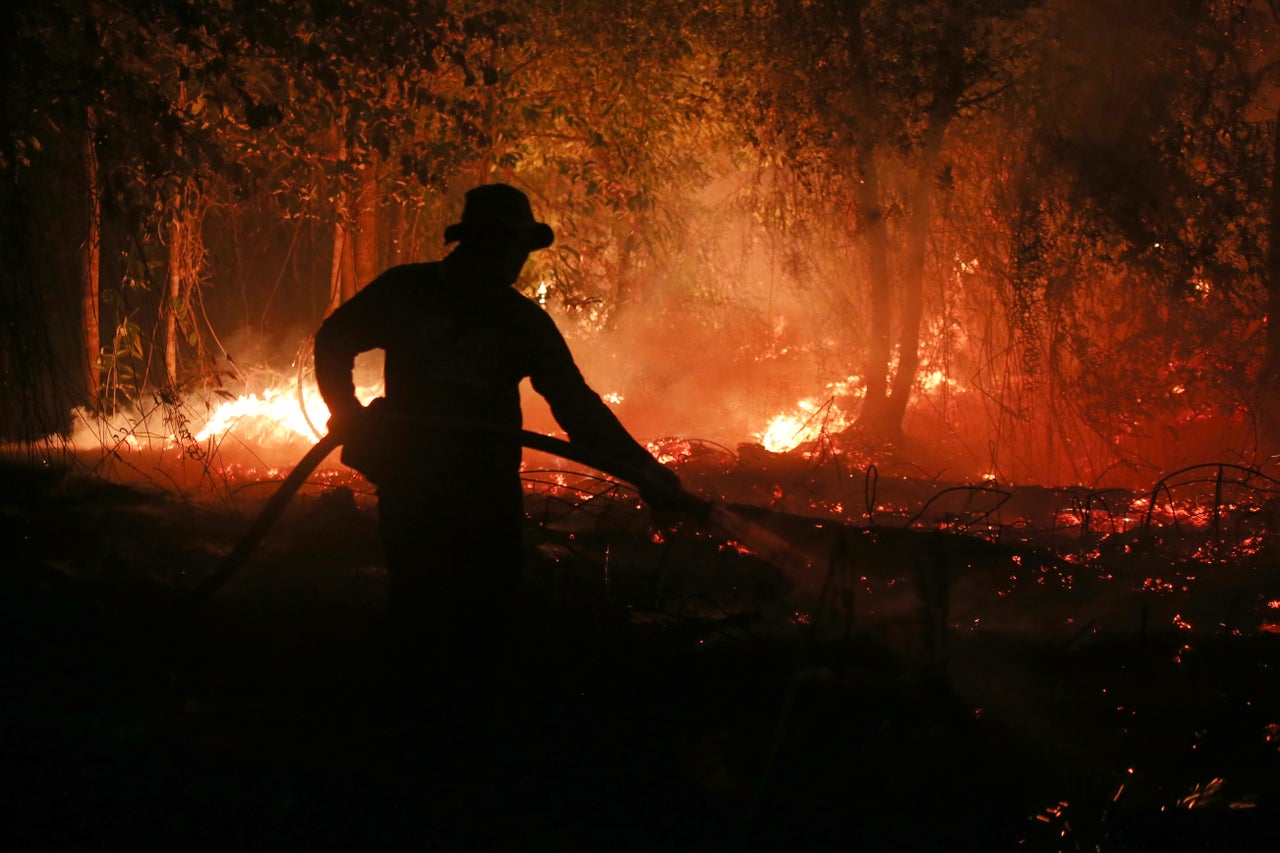
FILE - A firefighter sprays water in an attempt to extinguish a wildfire burning through a peatland forest in Pulang Pisau, Central Kalimantan, Indonesia (AP)
The study combined seasonal temperature forecasts with localised estimates of how high temperatures affect mortality across more than 24,000 regions worldwide, comparing expected deaths under El Nino-driven heat with those expected if temperatures had remained in line with the past three decades.
The Climate Impact Lab said global land temperatures during this El Nino could be higher by about 1.2C, producing 44 per cent more extremely hot days than in a typical year, and that these conditions could mirror what climate crisis may make common in about 20 years.
Independent experts not involved in the study broadly supported its findings while pointing to their limits.
Christopher Callahan, of Indiana University Bloomington, told The New Scientist the results were "plausible", noting that El Nino brings very high temperatures to much of the world and that the relationship between heat and mortality is "consistent and reliable" globally.
He said the study looked only at heat-related deaths, and that El Nino's influence on wildfires, infectious disease and flooding meant the total toll could be higher.
Abhiyant Tiwari, a heat expert at NRDC India who was not involved in the study, said its projections should serve as a call to action rather than a fresh source of alarm, though he warned that having well-designed plans, as India does, was not the same as being able to fund and implement them.
"The real measure of our preparedness is not how many heat warnings we issue, but how effectively we protect people and reduce preventable deaths," he said, according The Asosciated Press.
The report recommends measures including heat-warning systems, cooling centres, hydration stations, protections for outdoor workers, expanded hospital capacity and targeted outreach to elderly people and other vulnerable groups, along with what its authors call "anticipatory financing" to move resources ahead of dangerous heat peaks.
Source: “AOL Breaking”
